About Ductal®
  • Send to
  • Print
  • Bookmark
Sustainable Development

Sustainable Development, is development that "meets the needs of the present without compromising the ability of future generations to meet their own needs"*.


The properties of Ductal® make it the ideal technology to build sustainable eco-friendly creations.


Using this material in an optimized design which minimizes initial material consumption and provides for very long design life can create a paradigm shift in how sustainable infrastructure may be viewed. An order of magnitude increase in design life will approach the current usage life of European Cathedrals or Roman Coliseums. 


Used in slender elements, Ductal® offers a solution with a reduced impact on the environment compared to steel, other metals or traditional concrete.  Its integration in the building's design will enable lower CO2 emissions, reduced quantities of materials used and  the reduction of primary energy consumption through:


  • Very low consumption of natural resources throughout the value chain
  • An exceptionally long useable lifespan
  • Extremely low maintenance requirements.


Ductal® helps reduce the consumption of non-renewable resources. It uses less materials to produce at least similar and usually superior performance to traditional solutions.


At the end of their useable lifetime, the absence of passive reinforcements in constructions built with Ductal® vastly facilitates its recycling and reuse, further benefiting Lafarge's good stewardship of the environment.


Case studies in the field:
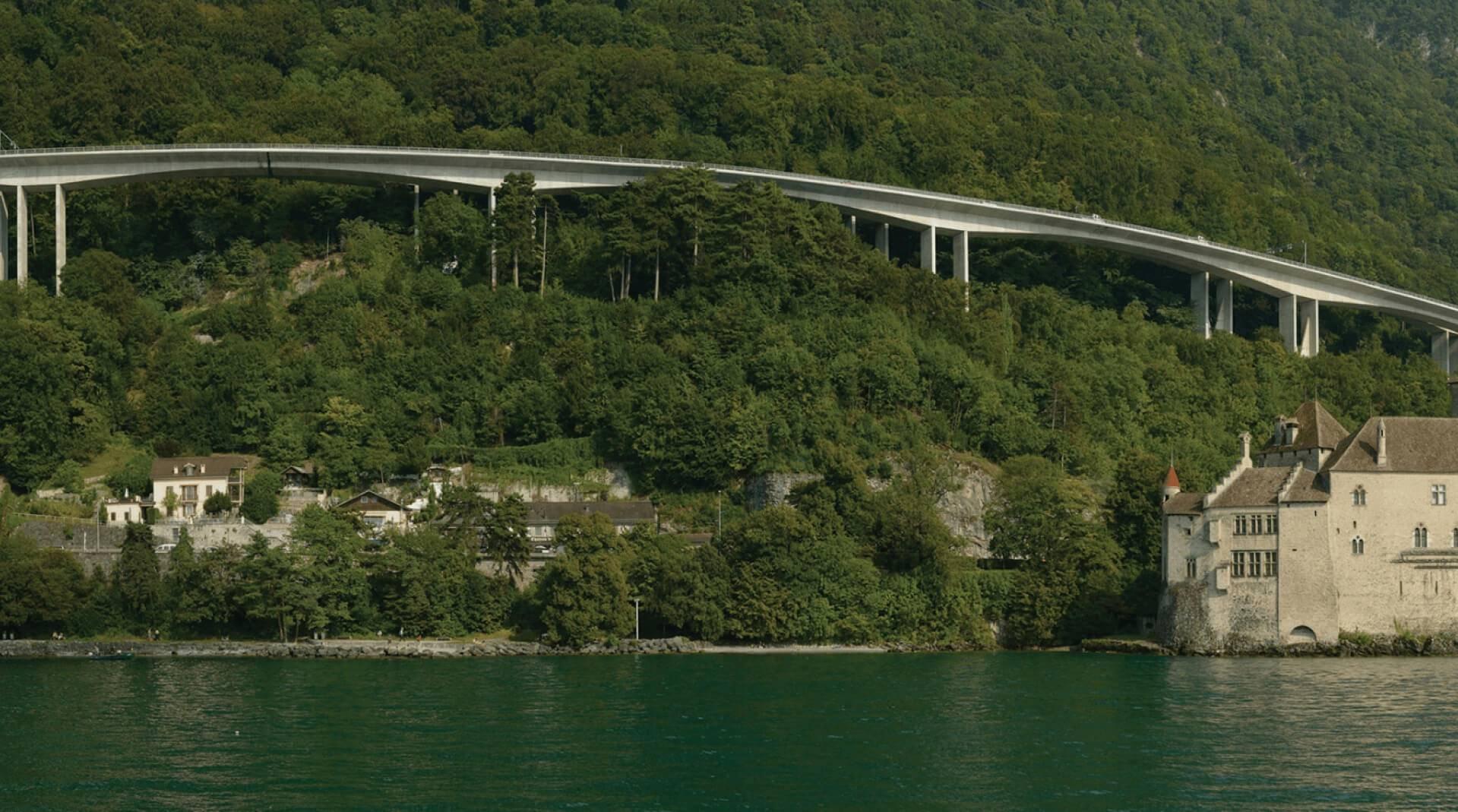
Comparative study carried out on a road bridge using traditional technologies and Ductal®:


  • mixed (steel beam - concrete apron)
  • Ductal® 


Each Ductal® project may be somewhat unique. If you are seeking LEED certification, please contact  (link to Kelly.henry@lafarge-na.com) to find out how your Ductal® project may be integrated into the certification process.

For more information, see: LEED sheet:

http://87.230.81.56/imagineductal/public/eng/pdf/LEED2009.pdf


LEED: Internationally-recognized label, attesting that the design, construction, operations and maintenance are compliant with environmental regulations on all types of building. http://www.usgbc.org/


France:

High Environmental Quality (HEQ): The French association HQE brings together members of the construction industry in order to develop the environmental quality of buildings on a joint basis. It is a network where the members exchange skills and experience to assist on individual and joint projects.

http://www.assohqe.org/


Low Consumption Buildings (LCB): an official label concerning the content and conditions of attribution of "high energy performance" certification. The reference requirements are established by the association Effinergie, which is also responsible for the certification process.


LCB-certified housing must not exceed 50 kWh PE/m2/year (Kilowatt hours of primary energy per square meter per year). Heating, air conditioning, sanitary hot water, lighting and ventilation are all involved. This requirement varies according to the region and the building altitude.


Other countries

Life Cycle Assessment (LCA): assesses the impact of a product on the environment over its lifetime.

http://www.pre.nl/life_cycle_assessment/life_cycle_assessment.htm


LEED Approach: advice on materials use

http://leedpro.weebly.com/


*Sustainable Development: United Nation's "Brundtland Commission"


How Ductal® UHPC (Ultra High Performance Concrete) contributes to Sustainable Construction

Ductal® is an ultra-high performance, fiber reinforced material that provides superior strength, ductility, durability and aesthetic design flexibility. This unique combination of properties facilitates the ability to create innovative designs with new shapes that are thinner, lighter and more graceful (compared to conventional concrete).  


We strive to improve the properties of our materials in terms of durability, mechanical strength, aesthetics and environmental footprint.  Basically, Ductal’s superior durability and strength properties make it sustainable and its extended service life will result in less environmental impact over time -- when compared to structures built with conventional materials.  Furthermore:


·         With compressive strengths up to 30,000 psi and flexural strengths up to 6,000 psi, solutions can be designed with smaller elements, possibly without the use of passive reinforcing steel.

·         Ductal projects may result in reduced global construction costs, formworks, labor and maintenance.

·         Ductal projects may increase speed of construction.

·         Ductal’s durability and strength properties assist with design optimization by minimizing initial material consumption and providing a very long design life.

·         Ductal elements provide superior impermeability against corrosion, abrasion and impact.

·         Based on ion transportation predictive modeling (see chart below), it would take 1,000 years for Ductal to have the same level of chloride penetration as high-performance concrete would have in less than 100 years.

·         The construction of bridges or building façades with a possible design life of 1,000 years, with little to no maintenance, is a huge paradigm shift from the way sustainable infrastructure is viewed today.

·         UHPC’s can help to reduce CO2 emissions, the quantity of material used and primary energy consumption.  

·         At the end of Ductal’s useable lifetime, the absence of passive reinforcements (in most projects) facilitates its ability to be recycled and reused.


Predicting Service Life with Chloride Ion Transportation Predictive Modeling:


Sustainable Development Ductal UHPC

Predicted penetration rate of chloride ion threshold (Ct) = 0.05%

Last update on 20/10/2011

  • Send to
  • Print
  • Bookmark
Ductal korean garden uhpc

See inspiring Ductal® projects

Ductal perforated panels uhpc

From the world of: